

Open horizons, enduring traditions and unforgettable journeys across the heart of Asia.
Mongolia stretches from grassland valleys to desert cliffs, high mountains and northern forests. Across roughly 1.56 million km², a population of about 3.6 million shares a landscape where herding traditions remain part of daily life.
Come for the wide views; stay for the stories, history and hospitality found along the way.
Total area
People (2025)
One remarkable journey
Each region brings a different pace and landscape. Combine them according to your time and interests.
Follow the Orkhon Valley to Kharkhorum and Erdene Zuu, then trade green hills for the dunes of Elsen Tasarkhai.
Explore the Khongor dunes, the red cliffs of Bayanzag and the cool ravine of Yolyn Am.
Mountain routes, glaciers and lakes frame encounters with the Kazakh eagle hunting tradition.
Lake Khövsgöl and the taiga invite slower travel, hikes and thoughtfully arranged cultural visits.
The broad Menen Steppe and the historic landscapes of Khentii reward travelers seeking quieter routes.
Select a province on the map to discover its overview and key attractions. Ulaanbaatar is shown separately as the capital city.
Loading the map…
Located in central Mongolia, Arkhangai is known for the Khangai Mountains, green valleys, hot springs and volcanic landscapes. Terkhiin Tsagaan Lake, Khorgo Volcano and Taikhar Rock are among its notable destinations.
Established: 1931
As of 2026: 95 years
Area: 55,300 km² (approx.)
Soums: 19
Provincial capital: Tsetserleg
At Mongolia’s western frontier, Bayan-Ölgii is home to the high peaks of the Mongol Altai and distinctive Kazakh cultural traditions, including eagle hunting. Altai Tavan Bogd National Park and Khoton and Khurgan Lakes are highlights.
Established: 1940
As of 2026: 86 years
Area: 45,700 km² (approx.)
Soums: 13
Provincial capital: Ölgii
Bayankhongor spans mountain and desert landscapes, from the Khangai region to the Gobi. Shargaljuut Hot Springs, Ikh Bogd Mountain and Tsagaan Cave reflect its natural and historical diversity.
Established: 1941
As of 2026: 85 years
Area: 116,000 km² (approx.)
Soums: 20
Provincial capital: Bayankhongor
Bulgan features forest-steppe scenery, river valleys and historical sites. Uran Togoo volcanic area, Khugnu Tarna and Khanui Hot Springs are popular natural attractions.
Established: 1937
As of 2026: 89 years
Area: 48,700 km² (approx.)
Soums: 16
Provincial capital: Bulgan
Darkhan-Uul is closely associated with Mongolia’s industrial and urban development. Visitors can explore Darkhan city and heritage sites along the Kharaa River valley.
Established: 1994
As of 2026: 32 years
Area: 3,300 km² (approx.)
Soums: 4
Provincial capital: Darkhan
Located in eastern Mongolia, Dornod is known for expansive grasslands, lakes and historical landmarks. Menen Steppe, Buir Lake and the Khalkh Gol historical sites are key attractions.
Established: 1931
As of 2026: 95 years
Area: 123,600 km² (approx.)
Soums: 14
Provincial capital: Choibalsan
Dornogovi lies in southeastern Mongolia and combines Gobi landscapes with religious and cultural heritage. Khamar Monastery and Ikh Nart Nature Reserve are notable destinations.
Established: 1931
As of 2026: 95 years
Area: 109,500 km² (approx.)
Soums: 14
Provincial capital: Sainshand
Dundgovi offers striking Gobi rock formations, open steppe and scenic cliffs. Tsagaan Suvarga, Ikh Gazriin Chuluu and Baga Gazriin Chuluu attract nature lovers and photographers.
Established: 1941
As of 2026: 85 years
Area: 74,700 km² (approx.)
Soums: 15
Provincial capital: Mandalgovi
Combining high Altai mountains with arid Gobi landscapes, Govi-Altai is known for Eej Khairkhan, Sutai Khairkhan, Khasagt Khairkhan and Burkhan Buudai Mountain.
Established: 1940
As of 2026: 86 years
Area: 141,400 km² (approx.)
Soums: 18
Provincial capital: Altai
Govisumber is a compact province in Mongolia’s central Gobi steppe. Choir Bogd Mountain and the ruins of Zuun Janjin Choir Monastery are among its cultural landmarks.
Established: 1994
As of 2026: 32 years
Area: 5,500 km² (approx.)
Soums: 3
Provincial capital: Choir
Khentii is deeply connected with the history of the Mongol Empire and includes forest-steppe, mountains and rivers. Burkhan Khaldun, Khar Zurkhnii Khukh Lake and Baldan Bereeven Monastery are notable sites.
Established: 1931
As of 2026: 95 years
Area: 80,300 km² (approx.)
Soums: 18
Provincial capital: Chinggis City
Khovd in western Mongolia combines high mountains, lakes, dramatic gorges and diverse ethnic traditions. Khar-Us Lake, Munkhkhairkhan Mountain and ancient rock art are important attractions.
Established: 1931
As of 2026: 95 years
Area: 76,100 km² (approx.)
Soums: 17
Provincial capital: Khovd
Northern Mongolia’s Khuvsgul is renowned for pristine lakes, taiga forests and mountain landscapes. Lake Khuvsgul, the Darkhad Depression and Tsaatan reindeer-herder traditions offer distinctive travel experiences.
Established: 1931
As of 2026: 95 years
Area: 100,600 km² (approx.)
Soums: 23
Provincial capital: Murun
Umnugovi is known for vast Gobi landscapes, sand dunes, canyons and fossil sites. Khongor Sand Dunes, Yolyn Am, Bayanzag and Khermen Tsav are among its best-known destinations.
Established: 1931
As of 2026: 95 years
Area: 165,400 km² (approx.)
Soums: 15
Provincial capital: Dalanzadgad
Orkhon Province includes Erdenet, one of Mongolia’s major industrial cities. Its urban development, surrounding landscape and archaeological heritage offer opportunities for educational visits.
Established: 1994
As of 2026: 32 years
Area: 800 km² (approx.)
Soums: 2
Provincial capital: Erdenet
Uvurkhangai is a centre of Mongolian history and cultural heritage, with the ancient capital Kharkhorum and the Orkhon Valley. Erdene Zuu Monastery, Tuvkhun Monastery and Orkhon Waterfall are key destinations.
Established: 1931
As of 2026: 95 years
Area: 62,900 km² (approx.)
Soums: 19
Provincial capital: Arvaikheer
Northern Mongolia’s Selenge Province is characterised by forests, rivers and agricultural valleys. Amarbayasgalant Monastery, Tuj Pine Forest and Altanbulag are among its historical and natural attractions.
Established: 1931
As of 2026: 95 years
Area: 41,200 km² (approx.)
Soums: 17
Provincial capital: Sukhbaatar
Sukhbaatar Province features the open steppe and distinctive volcanic landscapes of Dariganga. Shiliin Bogd, Altan Ovoo and Ganga Lake are notable places to visit.
Established: 1941
As of 2026: 85 years
Area: 82,300 km² (approx.)
Soums: 13
Provincial capital: Baruun-Urt
Surrounding Ulaanbaatar, Tuv Province offers forests, mountains and historical sites. Gorkhi-Terelj National Park, Khustai National Park and Manzushir Monastery are popular nearby destinations.
Established: 1931
As of 2026: 95 years
Area: 74,000 km² (approx.)
Soums: 27
Provincial capital: Zuunmod
Uvs Province combines the Great Lakes Depression, mountain ranges and varied steppe landscapes. Uvs Lake, Khyargas Lake and the Kharkhiraa and Turgen Mountains are major natural attractions.
Established: 1931
As of 2026: 95 years
Area: 69,600 km² (approx.)
Soums: 19
Provincial capital: Ulaangom
Zavkhan extends across the Khangai highlands and the Great Lakes region, with mountains, lakes and striking sand formations. Otgontenger Mountain, Ulaagchiin Khar Lake and Mukhart River are highlights.
Established: 1931
As of 2026: 95 years
Area: 82,500 km² (approx.)
Soums: 24
Provincial capital: Uliastai
Ulaanbaatar is the capital and the principal political, economic and cultural centre of Mongolia. The city traces its origins to the establishment of Örgöö in 1639, settled in its present area in 1778 and was renamed Ulaanbaatar in 1924.
Founded: 1639
As of 2026: 387
Renamed Ulaanbaatar: 1924
Area: 4,704.4 km²
Population: approximately 1.77 million (2024 estimate)
Administrative divisions: 9 districts
Status: Capital of Mongolia
Every July, Naadam brings communities together through three traditional competitions. Beyond the arena, it is a chance to encounter music, food and the stories of the steppe.
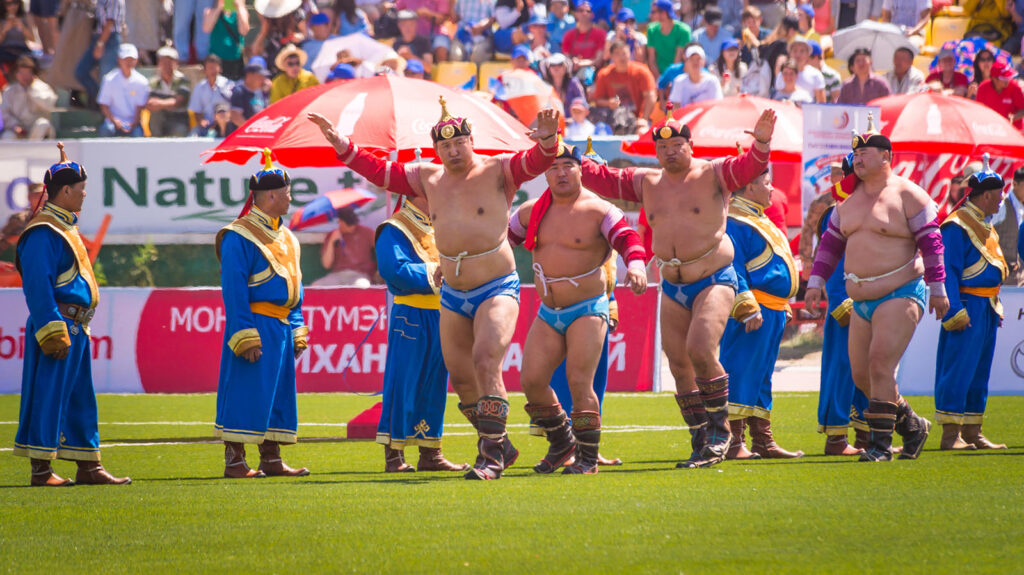
Mongolian wrestling is one of Naadam’s most celebrated traditions, bringing together wrestlers who compete in a test of strength, balance and technique. With no weight classes, each bout draws attention to the wrestlers’ skill and the ceremonial customs surrounding the sport.
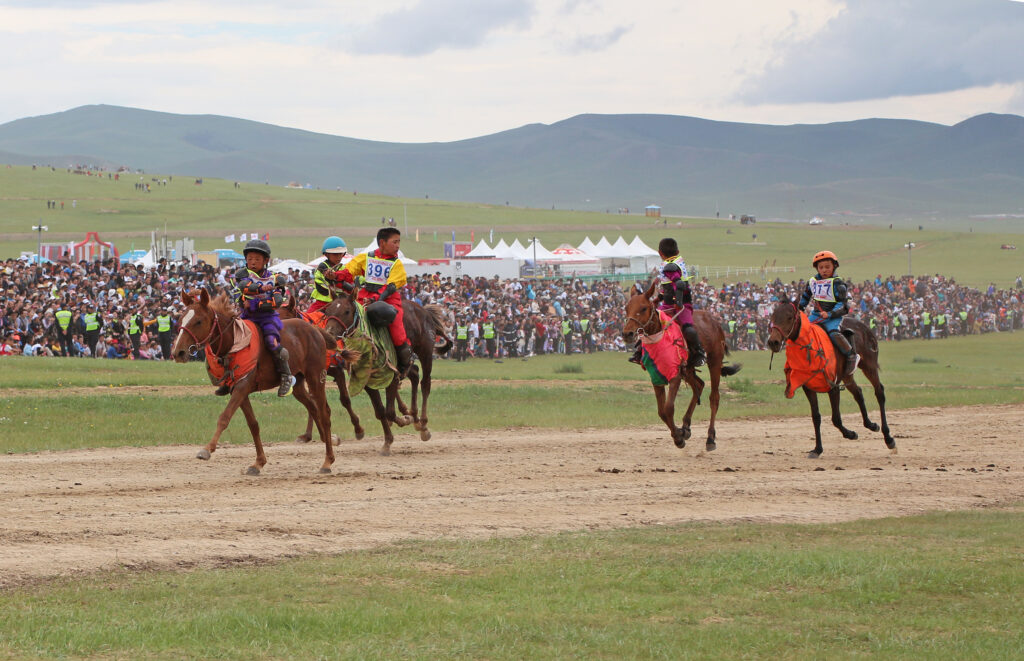
Naadam horse racing takes place across open countryside rather than on a conventional racetrack. Horses race over long distances according to age categories, reflecting Mongolia’s deep equestrian heritage and the important place horses hold in nomadic life.
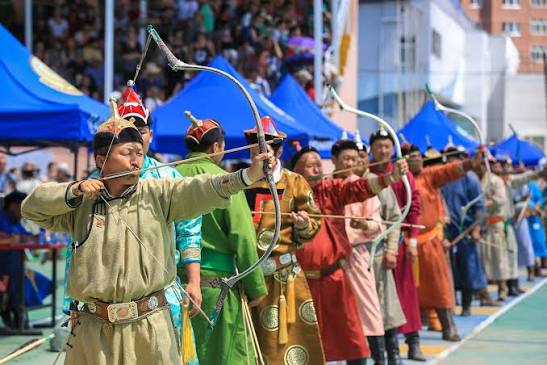
Traditional archery at Naadam combines concentration, accuracy and generations of craftsmanship. Competitors shoot at small targets using traditional-style bows, while spectators experience the distinctive calls and rituals that accompany this historic Mongolian sport.
Conditions vary widely by region and altitude. Your route and packing list should match the season.
A popular time for countryside journeys and Naadam. Pack layers for cooler evenings.
Good for photography and quieter travel; temperatures can fall quickly.
A very cold season that calls for proper clothing and careful planning.
Wind and changeable weather are part of the experience. Keep itineraries flexible.
Start in Ulaanbaatar. Most international arrivals begin at Chinggis Khaan International Airport. Road journeys can be long, especially beyond the capital.
Pack for change. Bring layers, sturdy footwear, sun protection and personal essentials. Weather and road conditions may alter the day’s plan.
Make it yours. Choose a region, a travel season and a pace; BE TRAVEL can help shape a route around them.
Browse our routes, then tell us what you would like to see and how you want to travel.